How to Stack Gold Rings for Summer 2026: The Complete Guide

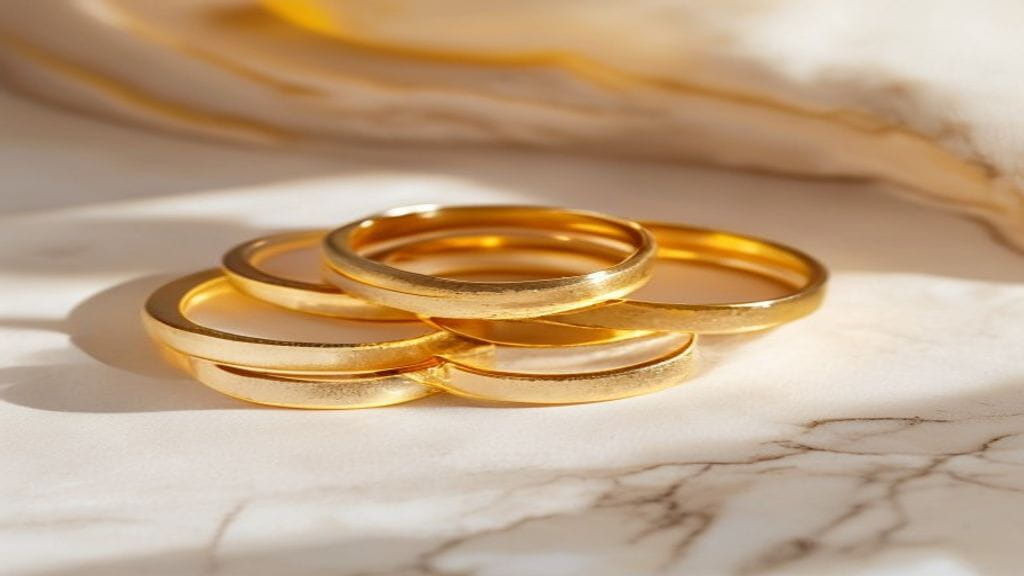
Short answer: The best gold rings to stack for Summer 2026 are a slim plain band (1.5–2mm width), a small signet or flat geometric ring, and a thin twisted or hammered band — worn in a 3-ring stack on one finger or spread across two fingers of the same hand. All yellow gold, all under 3mm width individually. That is the formula that reads both minimal and considered at the same time.
Stacking rings has moved from a trend to a permanent category in summer jewellery. But the way people stack has shifted significantly heading into 2026. The maximalist approach — piling on a dozen mixed-metal rings of every shape and texture — has given way to something more restrained: a curated 2–3 ring combination, all in the same metal, with a clear logic to the pairing. The rings themselves are thinner, more architectural, and far more wearable across every context from a rooftop dinner to a beach afternoon. If you have not revisited your ring stack this season, this guide covers exactly where the conversation is heading and how to build a combination that works for your hand.
The 5 Gold Ring Stacking Trends Defining Summer 2026
Here is where the strongest editorial and retail consensus is pointing for ring stacking this season.
1. The Three-Band Flat Stack. Vogue identified the slim triple band stack — three plain or lightly textured gold rings on a single finger, each no wider than 2mm — as the defining ring look of Summer 2026. The proportions are everything: each ring must be thin enough that all three together read as a cohesive unit, not three separate rings competing for the same space. The stack sits on the ring finger or middle finger, never the index, and all three bands are the same yellow gold tone.
2. The Modern Signet. Who What Wear called the minimalist signet ring — a small flat face, oval or rectangular, no engraving or embossing — the breakout ring of the season. Worn alone or as the anchor piece in a two-ring stack with a slim plain band alongside it, the modern signet reads as an heirloom without the weight or bulk of a traditional signet. Worn on the pinky or ring finger, it gives the hand a quiet authority that a simple band alone does not.
3. The Twisted Wire Band. A single twisted or rope-detail band — fine gold wire twisted into a consistent pattern, approximately 1.5–2mm in total width — is the texture element in a Summer 2026 stack. Marie Claire's accessories editor singled out the twisted band as the best way to add visual interest to an otherwise plain stack without introducing stones, chunky forms, or mixed metals. One twisted band with two plain bands creates depth without complexity.
4. The Two-Finger Spread. Vogue and Who What Wear both noted the shift from stacking all rings on one finger to spreading across two adjacent fingers — typically the ring and middle finger, or the middle and index finger — with one ring on each. The spacing reads modern and architectural. The key rule: the rings on each finger must be thin enough that there is clear visual separation between them when the fingers are held together naturally.
5. The Hammered Finish Band. A lightly hammered gold band — the hammering creating small irregular facets that catch light differently at every angle — is the alternative to the twisted band for texture. Marie Claire highlighted hammered finishes as one of the strongest surface treatments of the season, particularly in yellow gold where the facets create warm, honeyed reflections. Worn as one element in a three-ring stack, it anchors the combination without dominating it.
How to Evaluate a Stacking Ring Before You Buy: A 4-Point Framework
| Factor | What to Look For | Red Flag | Best For |
|---|---|---|---|
| Band Width | 1.5–2.5mm per ring for stacking; up to 3mm for a solo statement band | A ring over 4mm wide marketed as a "stacking ring" — it will crowd other rings and dominate the stack | All finger types; narrower for slimmer fingers |
| Profile Shape | Flat or low-dome profile sits flush against adjacent rings and prevents uncomfortable rotation on the finger | A high-dome or deeply rounded profile that creates gaps and causes rings to slide and rotate independently | Three-ring stacks, two-finger combinations |
| Sizing Precision | Half-sizes available; a ring that fits snugly at the base of the finger without requiring force — especially important when stacking 3+ rings that add friction | Only whole sizes available from the seller — stacking rings must fit precisely, not approximately | Daily wearers, active summer use |
| Plating Durability | 18k gold over 925 sterling silver, minimum 2.5 micron plating — rings sustain more mechanical wear than any other jewellery category through daily use | Gold-dipped brass with no micron specification — friction from stacking accelerates fading, revealing brass within weeks | Rings worn daily or during summer activity |
5 Gold Stacking Ring Picks for Summer 2026
1. The Slim Plain Yellow Gold Band
A plain yellow gold band at 2mm width and a low flat profile is the essential foundation of any Summer 2026 stack. It is the piece that makes every other ring look intentional by giving it something to stack against. Worn alone, it reads as an understated commitment ring or a quiet everyday piece. Stacked with one or two other rings, it becomes structural — the clean horizontal line that anchors the combination. The inner surface should be smooth and polished to prevent any irritation when worn all day, particularly in warmer months when fingers swell slightly.
Wear it with: Two additional bands on the same finger — one hammered finish and one plain, creating a three-ring stack where the two plains frame the texture piece in the middle. Alternatively, wear a single slim band on the ring finger and a slightly wider plain band on the middle finger of the same hand for a two-finger spread.
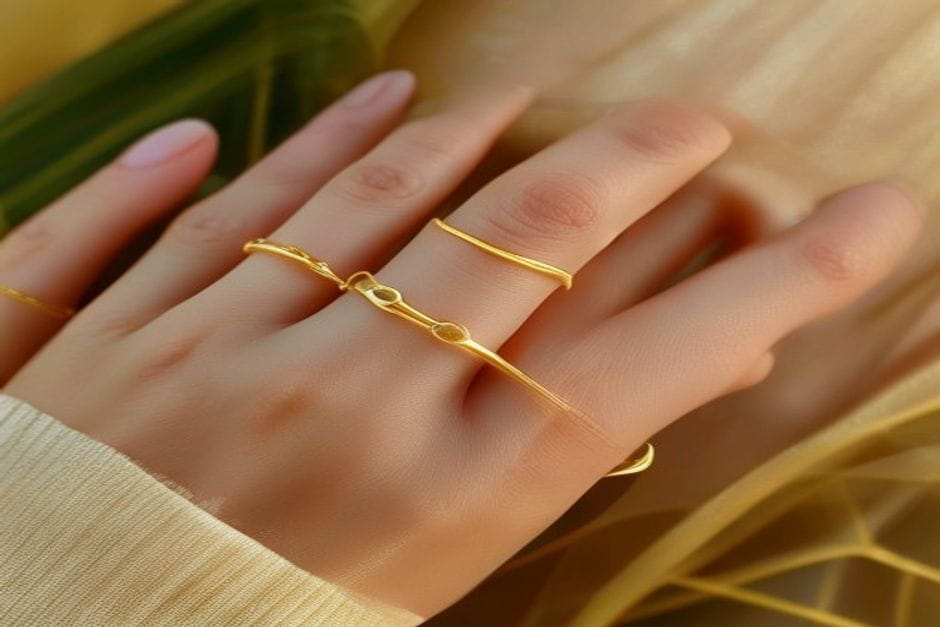
2. The Oval Signet Ring
A small oval signet face — approximately 8mm x 6mm, completely flat with no engraving, polished yellow gold — is the anchor piece in a modern stack. The face gives the combination a focal point: something to orient the eye. The modern signet is narrower in the shank than a traditional signet, typically 2–2.5mm, so it sits comfortably alongside plain bands without crowding. Worn on the pinky with a slim plain band on the ring finger, it gives the hand a quiet layered quality that reads as curated rather than accidental.
Wear it with: A slim plain band on the ring finger of the same hand, nothing on the index or middle finger. Keep the other hand clean — no rings — so the signet combination stands as a single considered statement. Works especially well with short nails that leave the rings fully visible against the finger.
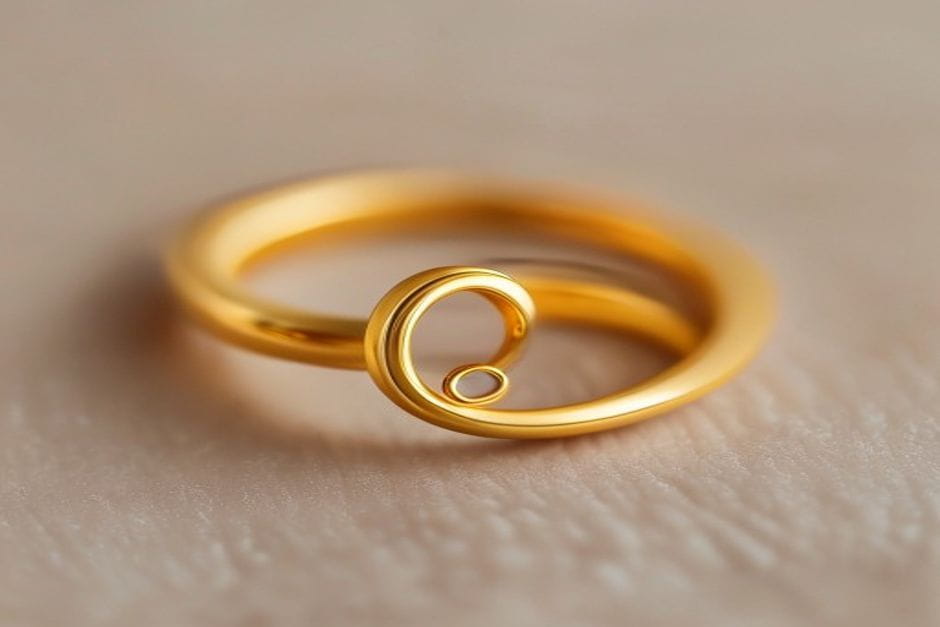
3. The Twisted Wire Band
A twisted gold band — two fine wires twisted together into a consistent rope pattern, total width approximately 2mm — adds texture to a stack without adding visual weight. The twist catches light at a completely different angle than a plain band, creating movement within the stack even when the hand is still. Worn as the centre ring in a three-band stack with a plain band on either side, the twist becomes the detail element that elevates the combination from basic to intentional. The texture also disguises minor surface scratches over time — a practical advantage for a ring worn daily through summer activities.
Wear it with: One slim plain band on each side of the twisted ring on the same finger — three rings total, the twist in the middle. The symmetry of plain-twist-plain is the most balanced stack in this edit and works on any finger. Avoid wearing the twisted band next to a signet; the texture contrast is too competing at close range.
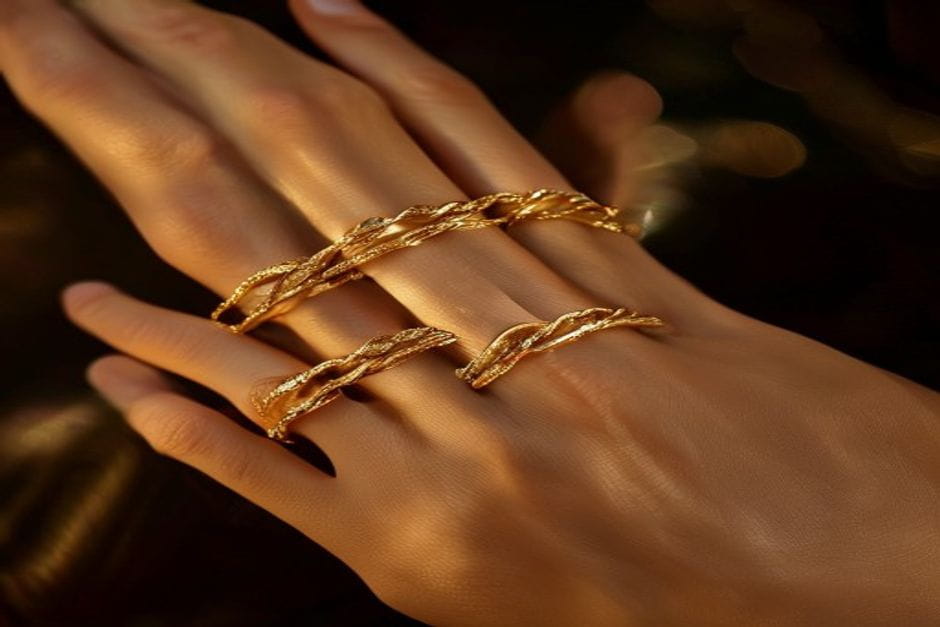
4. The Hammered Finish Band
A lightly hammered yellow gold band at 2–2.5mm width — the hammer facets covering the full outer surface in an irregular but consistent pattern — is the warm-light piece in a Summer 2026 stack. Where a plain band reflects light in a single direction, a hammered band sends light in multiple directions simultaneously, creating a warm golden shimmer that becomes especially visible in outdoor summer light. Worn as the widest ring in a stack — at 2.5mm against two 1.5mm plain bands — it naturally draws the eye while still reading as part of a cohesive combination.
Wear it with: Two slim plain bands on the same finger, placing the hammered ring at the base of the stack closest to the knuckle, so the texture faces outward and catches the most light. A hammered ring also works as a solo piece on the middle finger with two plain bands on the ring finger alongside it — a two-finger combination where each finger has a distinct visual personality.
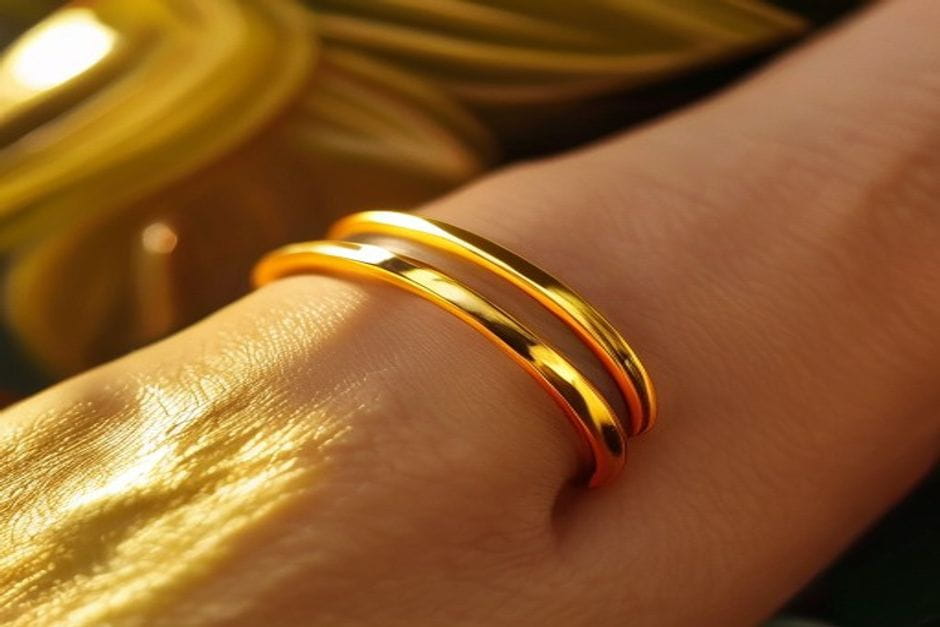
5. The Open-Circle Geometric Ring
An open-circle ring — a circle of flat polished gold wire forming a complete round shape, attached to a thin shank, total diameter approximately 8mm — is the architectural piece in a modern ring stack. The open circle extends slightly above the finger's profile, giving the stack a three-dimensional quality that plain bands cannot achieve. It is most effective worn on the index finger as the only ring on that finger, with a two or three-band stack on the middle finger of the same hand. The contrast between the architectural form on the index finger and the flat bands on the middle finger creates a deliberate, editorial hand composition.
Wear it with: A two-band plain stack on the middle finger of the same hand, and nothing on the ring or pinky fingers. The open-circle ring is a statement within a minimalist framework — it works best when the surrounding pieces are clean and uncluttered. Particularly strong with sleeveless summer tops or cami dresses where the hands and wrists are fully visible.

3 Rules That Make a Ring Stack Look Intentional
Rule 1: Commit to One Metal Temperature. Yellow gold, rose gold, and silver should never share a stack in a minimalist look. Choose one metal and wear all rings in the same temperature. Mixed-metal stacks work in maximalist aesthetics but read as unfinished in a quiet-luxury context. Yellow gold is the dominant choice for Summer 2026 across every editorial reference, and it photographs and catches natural light better than rose gold in warmer conditions.
Rule 2: Keep One Finger Anchor-Free. A ring stack that covers every finger — even with slim bands — loses its editorial quality. The most considered stacks in Summer 2026 leave at least one finger on the ring-wearing hand completely bare. The empty finger creates negative space that makes the rest of the stack visible and deliberate. The index finger or pinky should be the bare one if you are stacking on the middle and ring fingers.
Rule 3: Scale to Your Finger Width. A 2.5mm band that looks refined on a wider finger can look bulky on a slimmer one, and a 1.5mm band that looks delicate on a slim finger can disappear on a wider one. The goal is a band width where the ring appears present but not dominant. If you are unsure, size down by 0.5mm from your instinct — rings almost always look better slightly narrower than you expect.
4 Mistakes to Avoid When Stacking Gold Rings
- Stacking rings of very different widths on the same finger. A 1.5mm band next to a 5mm band on the same finger creates visual imbalance — the wide ring dominates and the thin ring disappears. Keep band widths within 1mm of each other within a single-finger stack. Width variation belongs between fingers, not within a single combination.
- Wearing a stack on every finger simultaneously. Four or five ring-wearing fingers at the same time is maximalist territory, not minimalist. The Summer 2026 aesthetic is about concentration: a clear, considered two or three-finger combination on one hand, with the other hand completely clear. Choose your statement hand and commit to it.
- Choosing rings with sharp inner edges. A poorly finished inner band edge causes immediate discomfort when adjacent rings press against the skin during activity. Every ring in a stack must have a smooth, rounded inner surface — check this before purchasing, particularly for budget pieces where finishing quality varies. A sharp inner edge is tolerable on a single ring; it becomes painful in a three-ring stack within an hour.
- Ignoring seasonal finger sizing. Fingers swell in heat — sometimes by a half-size or more after extended sun exposure or physical activity. A ring that fits perfectly in a cool room can become uncomfortable or impossible to remove after a hot afternoon outdoors. Size your stacking rings at the slightly looser end of comfort in summer, and be cautious about wearing very tight stacks during beach days or workouts.
FAQ: Gold Ring Stacking for Summer 2026
How many rings is the right number for a minimalist stack?
Two to three rings on one or two fingers of the same hand is the minimalist sweet spot for Summer 2026. Two rings reads as deliberate and considered; three is the maximum before the stack starts reading as maximalist. If you want to wear more, spread them across two hands — but keep each hand to a maximum of three rings total, concentrated on one or two fingers rather than spread across every finger.
Which finger is best for a ring stack?
The ring finger and middle finger are the two best locations for a stack in 2026. The ring finger is the classic location and gives the stack cultural legibility — people read rings there as a considered personal statement. The middle finger is the modern alternative: slightly longer, more architecturally prominent, and free from any association with relationship status. The index finger works best as a solo piece location — one statement ring that stands alone — rather than a stacking finger.
Can you wear stacking rings with long nails?
Yes, but the proportions shift. Long nails visually extend the finger, which means you can wear slightly wider bands (up to 3mm) without them looking disproportionate. Long nails also draw attention to the whole hand, making the ring stack more visible and the choices more consequential. With long nails, a simple two-band stack is typically stronger than a three-band stack — less competition between the nails and the jewellery.
How do you keep stacking rings from spinning?
The main cause of spinning is a ring that is slightly too large for the finger. In a stack, one loose ring will pull others out of alignment. Size each ring for a snug-but-comfortable fit at room temperature, and expect them to fit tighter in warm weather. Low flat-profile bands spin less than high-dome profiles, which rock. If a specific ring spins no matter the size, a jeweller can add small sizing beads to the inner band to stabilise it.
Do ring stacks work for formal occasions?
Yes — a slim two or three-band gold stack reads as polished and intentional at a formal event, particularly when the rings are all the same metal and finish. For formal wear, stick to plain bands or a plain band paired with a small signet; skip the twisted or hammered finish rings, which are better suited to casual or daytime contexts. A simple gold band stack is one of the few jewellery combinations that scales from a beach afternoon to a black-tie dinner without adjustment.
Shop the Edit
Ready to build your Summer 2026 ring stack? Browse the full collection at mila2018 Jewellery for slim gold bands, modern signet rings, and textured stacking rings curated for the season. If you want to extend the gold look to your wrist, the Bracelet Edit includes slim gold chain and cuff styles that pair seamlessly with a three-ring stack — one metal, wrist to finger. For a complete summer hand look, the Jewellery Gift Sets offer ring and bracelet pairings that follow the same quiet-luxury formula. And if you are shopping for someone else, a set of two slim gold stacking bands is the most universally flattering gift in the collection — no face shape considerations, no length guessing, just clean gold in exactly the right proportion.